What is Askwa?
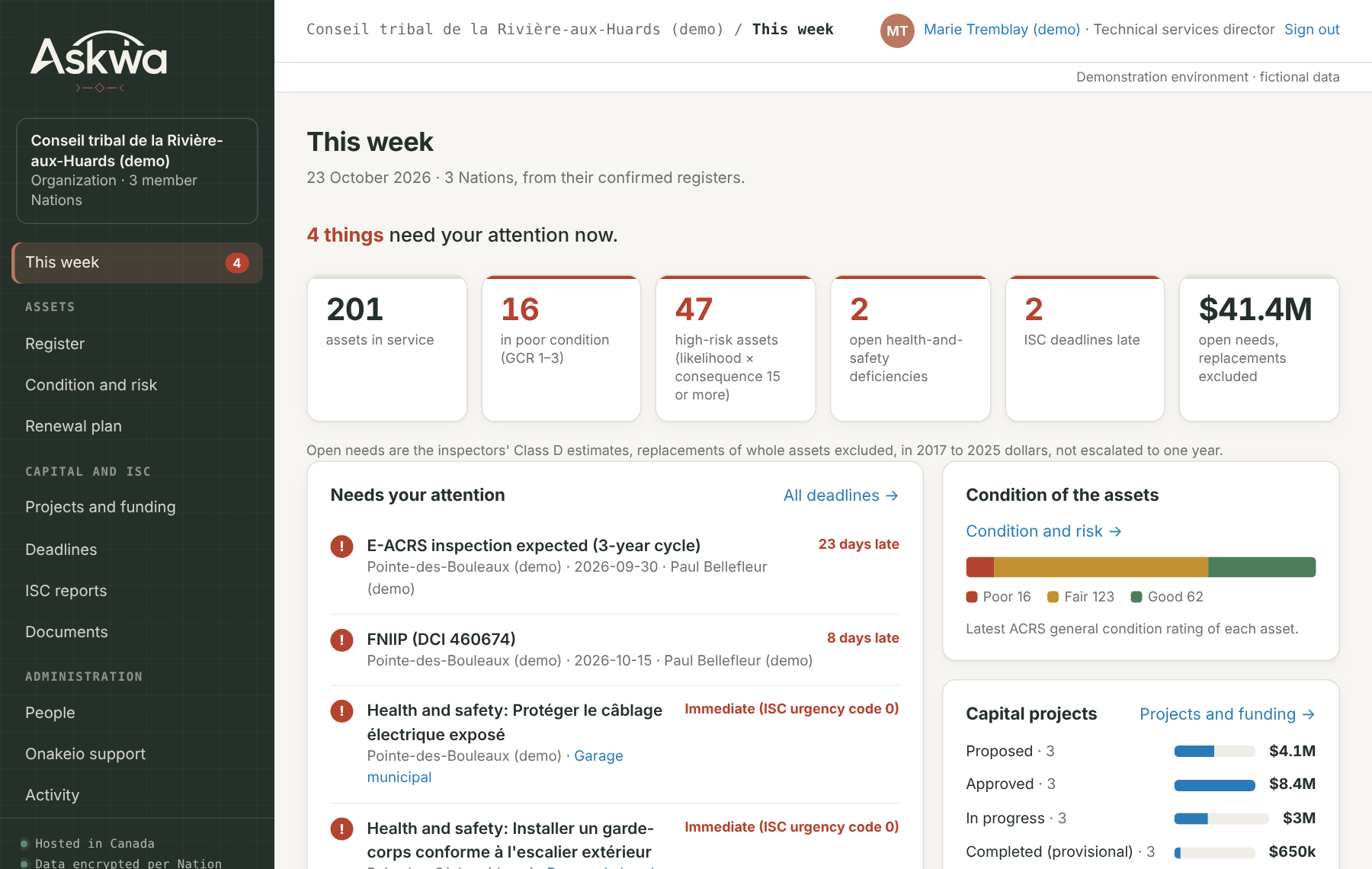
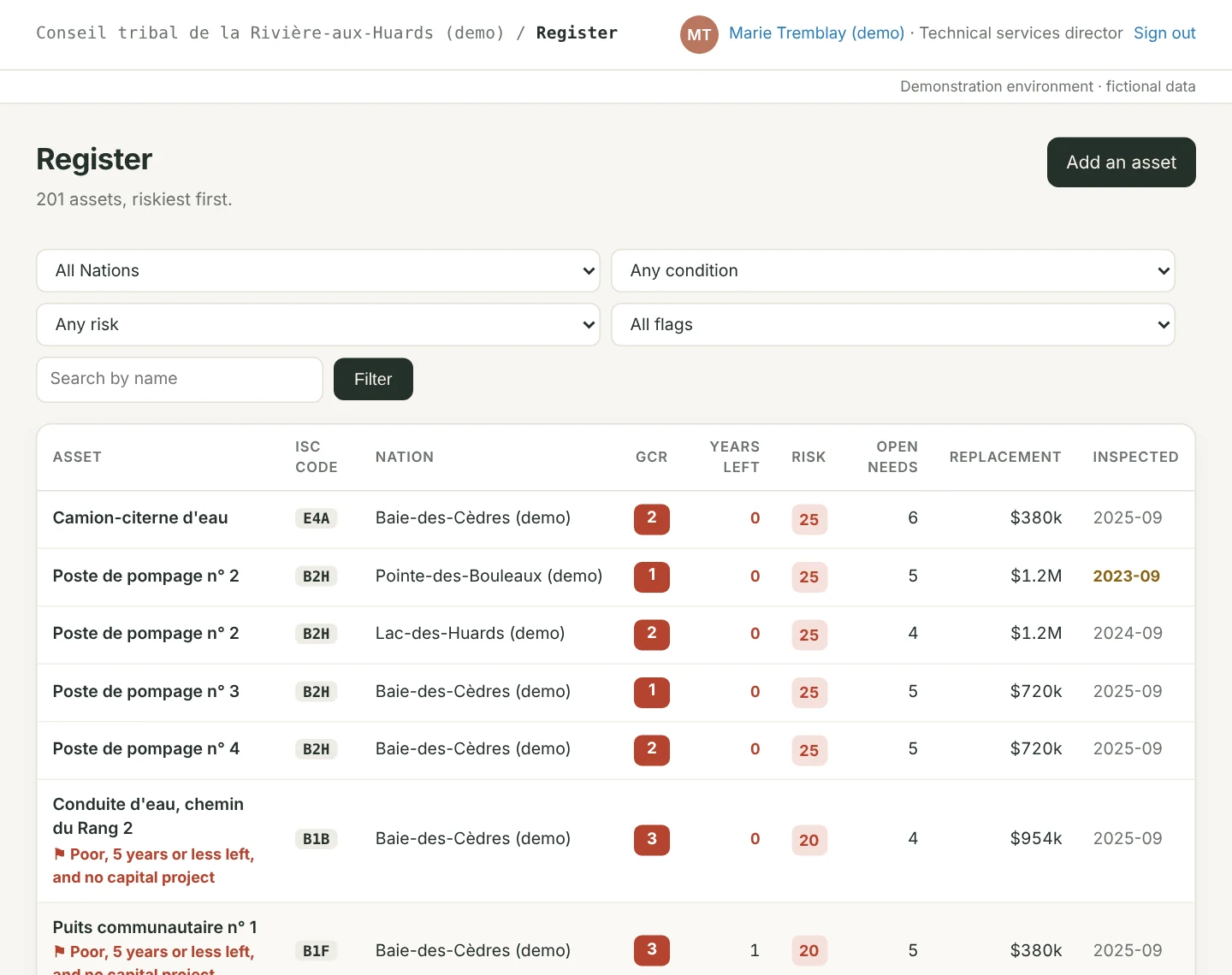
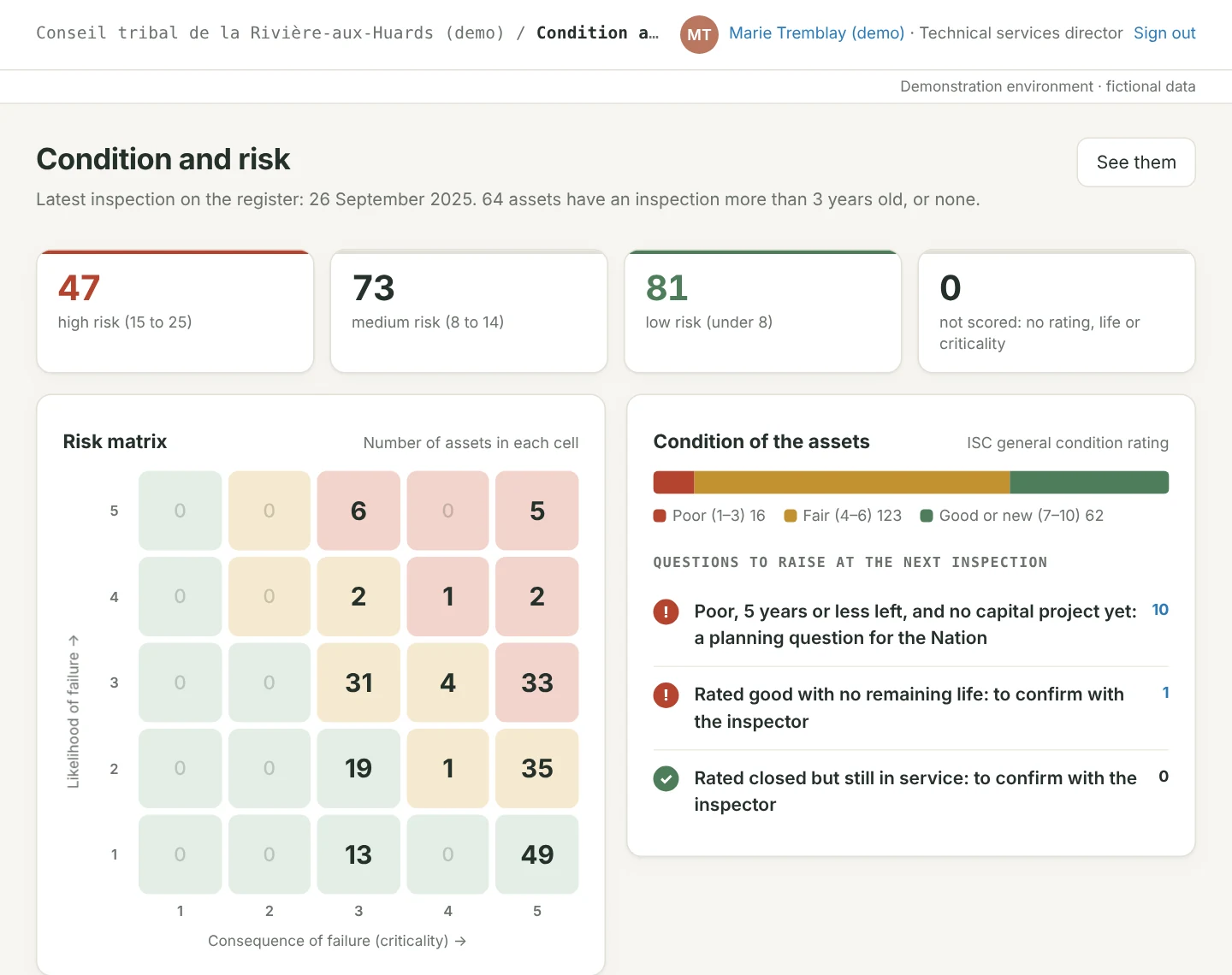
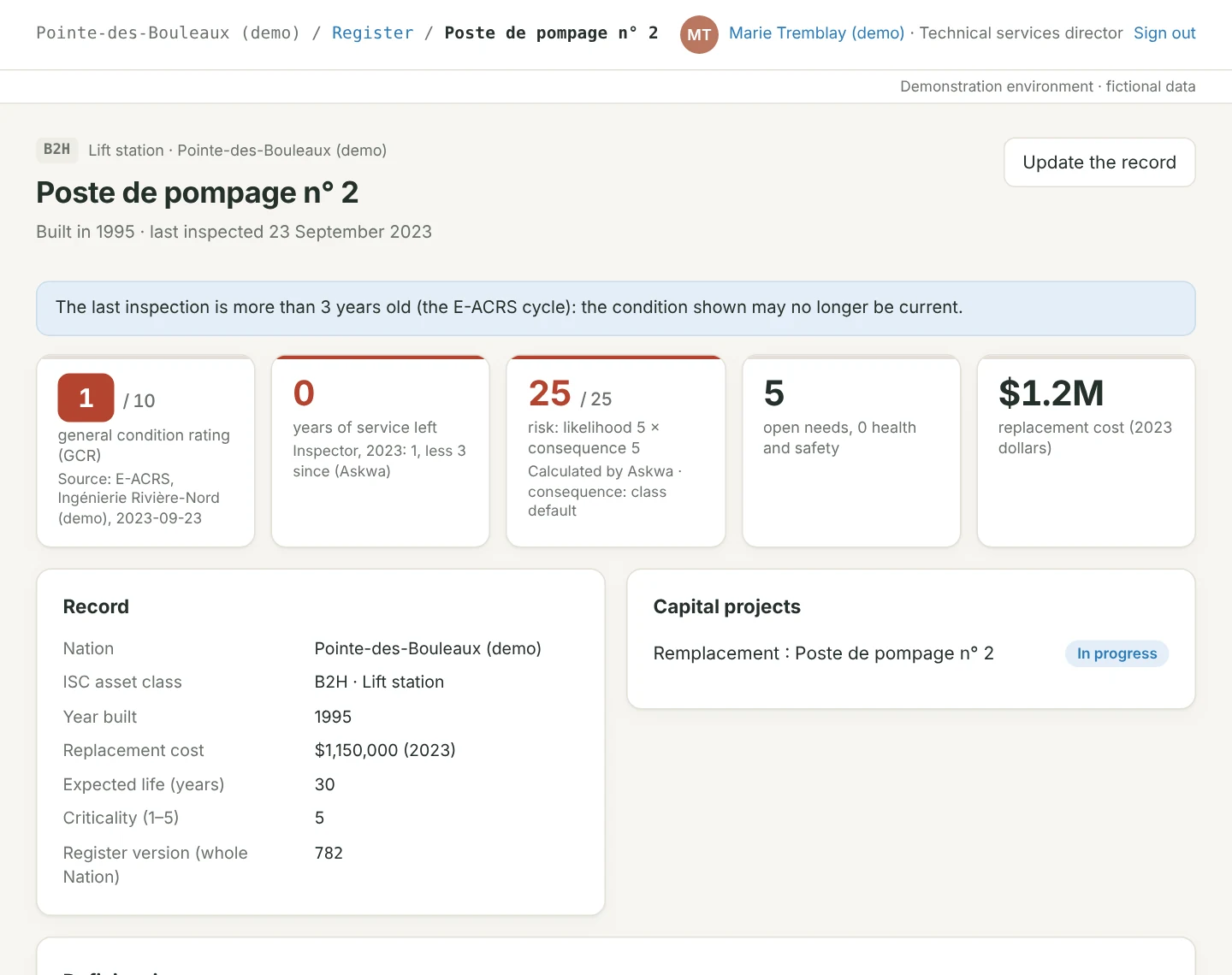
Askwa, asset and capital management system for Indigenous communities, with ISC reporting built in for First Nations, is offered to communities directly and through the tribal councils and technical services organizations that support them in Canada. It keeps the register of a Nation's infrastructure (housing, buildings, water and wastewater systems, roads, bridges, vehicles) and of the capital projects funded by Indigenous Services Canada (ISC).
Does Askwa work with the E-ACRS and the FNIIP?
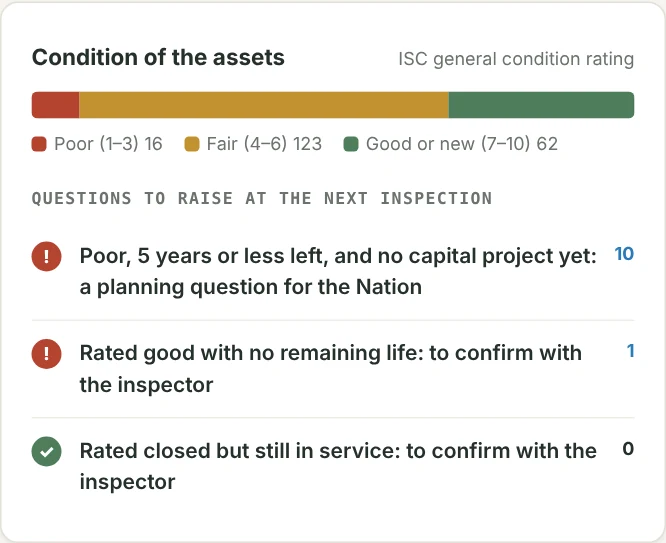
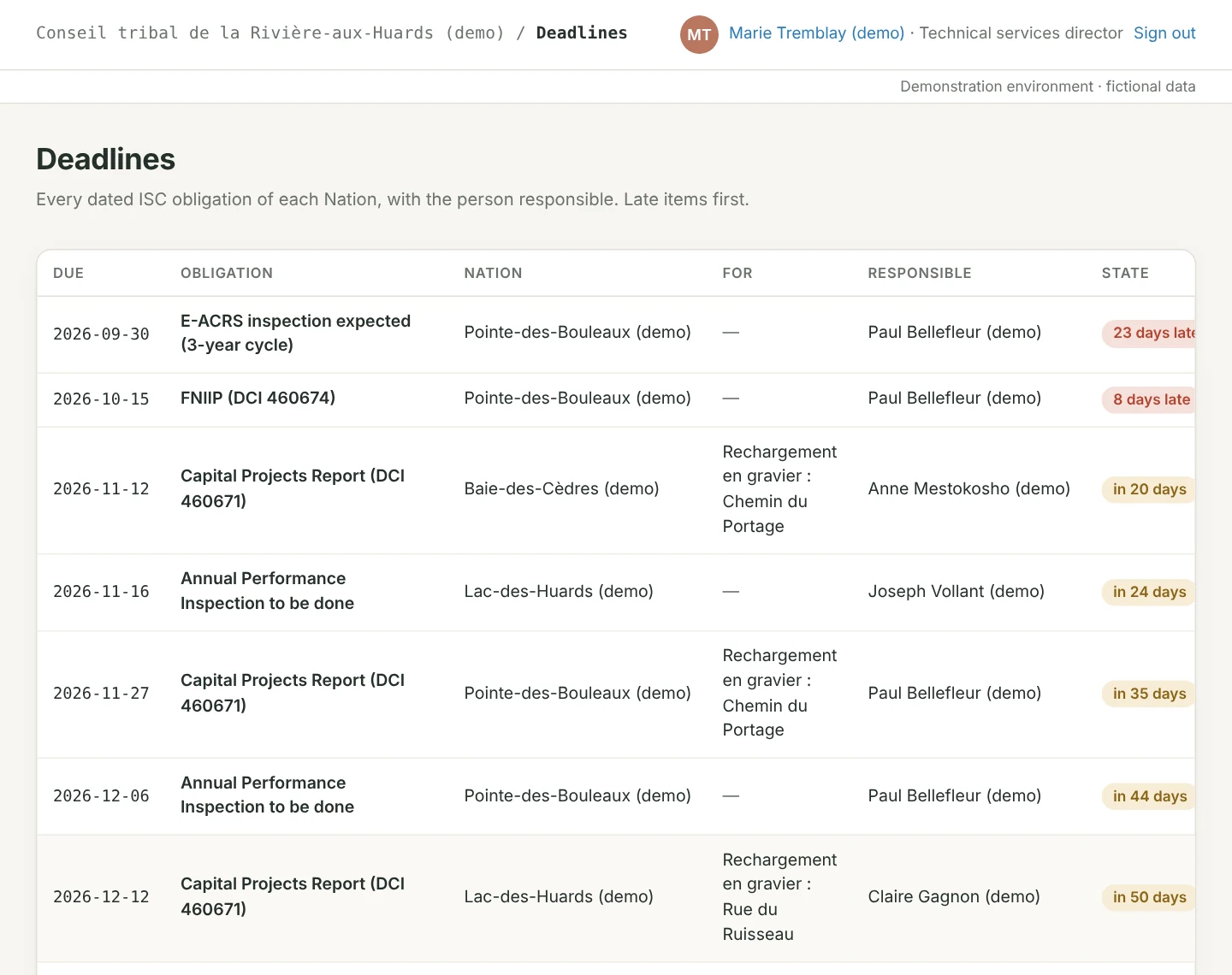
Yes. It keeps the results of each E-ACRS inspection with ISC's asset codes and condition ratings, the needs with their ISC codes, the FNIIP projects and funding requests, and the Capital Projects Reports (DCI 460671) each project owes.
Is Askwa connected to ISC's Integrated Capital Management System (ICMS)?
No. Askwa works from the Nation's own copies of its documents: the E-ACRS reports and lists, the FNIIP workbook, the inspection reports. Askwa does not read anything from ISC's systems and does not send anything to them.
Who owns the data?
The Nation. Askwa is designed to respect the OCAP® principles, and each Nation sees only its own data. Onakeio commits to giving a Nation a full export of its data at any time, at no cost.
How is Askwa offered?
By yearly subscription per Nation, usually through a tribal council or a technical services organization, with a one-time set-up of the register from the Nation's documents. Prices are given on request. ISC's Asset Management Program lists software tools among the costs it can fund; ISC decides eligibility proposal by proposal.
How is the data protected?
Documents are kept exactly as received, encrypted with each Nation's own key. Sign-in requires a password and a code from an authenticator app. Every sign-in and every change is recorded by the database itself. Askwa is built to SOC 2 criteria, with an audit planned. The data a Nation keeps in Askwa is never used to train a machine learning model.
Who can see a Nation's data?
The Nation's own people, in the roles its director gives them, and the organization that supports it, if there is one. Onakeio sees a Nation's data only with support access that the director gives, for at most 30 days, and every access is logged. Nobody else.
Does Askwa read documents by itself?
Not yet. Today a person enters the register from the documents, and Askwa checks each need against ISC's coding rules. We are preparing to read E-ACRS reports and FNIIP workbooks with machine learning, under four rules: (1) a value enters the register on its own only when every check passes; (2) a person reviews every value that Askwa cannot settle; (3) every value shows how it got there; and (4) a model never writes a number in a filing to ISC.
Can a Nation run Askwa on its own server?
No. Askwa runs as one service, hosted in Canada, in a Canadian data centre, so that every Nation has the same security, the same updates and the same backups. Onakeio commits to keeping the data in the Nation's possession: the Nation will be able to export all of it at any time, at no cost, and to receive a copy on the schedule it chooses, in storage it controls. That copy will open without Askwa.
Is Askwa in French?
Yes. Every screen is in English and in French, and each person chooses their language at the first sign-in.
 by Onakeio Systems · 100% Indigenous-owned